Can a tribe keep its soul when religion calls the shots?
That question cuts through Nigeria’s north and south like a hot blade through suya. In a country buzzing with over 250 ethnic groups and more than 230 million voices, it’s the Yorubas, Igbos, and Hausas who usually steal the spotlight. They don’t just carry culture. They wrestle with it, remix it, or let it ride in the backseat while religion grabs the wheel.
As someone who has lived in all three places, Let me share my thoughts on who’s driving, who’s navigating, and who’s just hanging on? Grab a seat. Let’s break it down.
The Yorubas: Heritage Holds the Crown
From the 8th-century city-states of Ife and Oyo to the street beats of Lagos, the Yorubas have been doing things their way for a long time. Back then, gods like Ogun and Sango ran the show. One with iron, the other with thunder. Then came the British, the Bible, and Islam through trade.
These days, Yorubas are almost evenly split between Christianity and Islam. But ask anyone who really runs the show, and you’ll get the same answer: Culture.
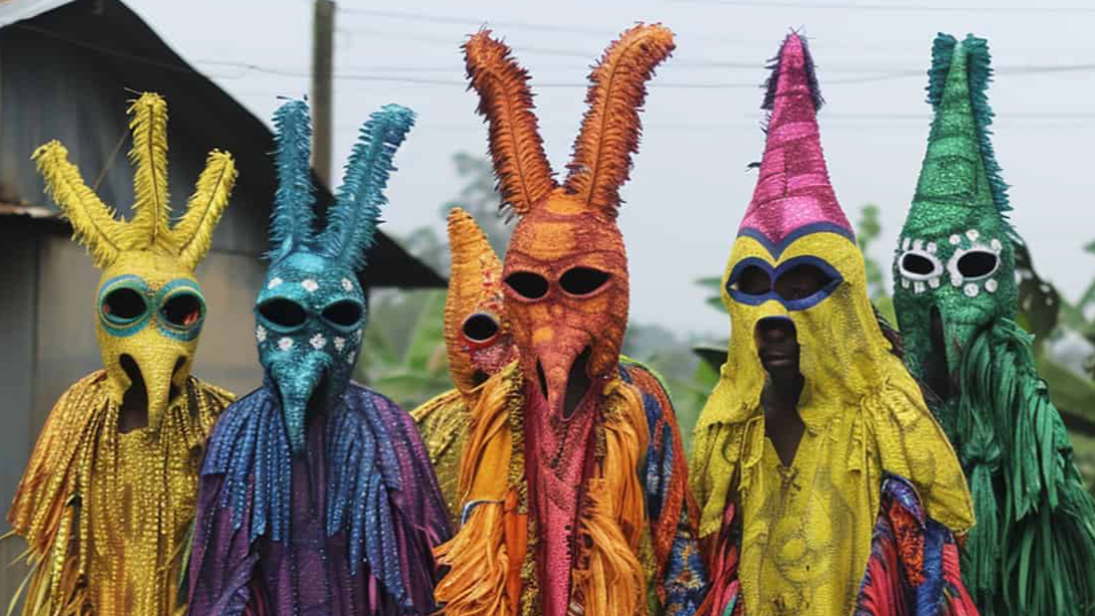
Take the Egungun festival; Ancestral spirits, masked dancers, and a riot of colour. The local imam and pastor might both be watching from the sidelines. Religion is welcome, but it doesn’t call the shots. It’s common to see someone at church on Sunday morning and at a traditional priest’s shrine by afternoon. I guess we can call it two-factor authentication but Spiritual double-booking is definitely part of the deal.
Even in Lagos, where global culture is just a click away, tradition still pulses in the background. Kids might rock Air Jordans, but they must still learn how to prostrate and greet elders in Yoruba. Culture holds the crown and it’s not giving it up anytime soon. Not in my lifetime.
The Igbos: Roots First, Rules Later
In the southeast, the Igbos trace their history back to the Nri Kingdom, which skipped kings and trusted priests and village councils instead. Life back then? Farming, masquerades, yam festivals, and communal decisions.
Then came the missionaries in the 1800s. Today, about 70-75% of Igbos are Christian, less than 1% Muslim, with a small group keeping traditional practices alive. But even with churches on every street, Omenala - the Igbo way still shapes how people live, marry, argue, and celebrate.
The New Yam Festival is the big show. It doesn’t care if you’re quoting Bible verses or calling on Chukwu, it’s about yams, music, and memory. You’ll find Onitsha traders naming their kids after market days Eke, Orie, Afo, Nkwo because traditions are never far off.
Igbo women often running businesses and households walk the line between faith and custom like true professionals. They don’t just balance both worlds. They own both worlds.
The Hausas: Islam in the Driver’s Seat
In the north, the Hausas built a trading empire by the 10th century, moving salt, grain, and stories across the desert. Islam showed up through trade by the 11th century and took deep root. By the 1800s, Usman dan Fodio launched a jihad and built the Sokoto Caliphate; a turning point for Islam’s rise in the region.
Today, over 95% of Hausas follow Islam. It’s not just faith. its foundation. You hear it in the call to prayer, see it in the babban riga robes, and feel it in how daily life is organized. Whether you’re in the City or villages or even at a market, Islam sets the tone.
Now that doesn’t mean culture’s gone. But it’s just quieter. The Durbar festival, with its dazzling horses and riders, still echoes old traditions. And in rural areas, some older women still practice Bori spirit rituals, a whisper of pre-Islamic life.
But the spotlight stays on Islam. In a region where literacy hovers around 50%, mosques often double as classrooms, community centers, and places of refuge. The line between spiritual and social life is very thin.
Is Culture Losing to Religion? Depends Who You Ask
So, when religion goes full throttle, does culture get kicked out? Among the Hausas, maybe. Islam covers nearly every aspect of life; rituals, rules, even what you wear. Traditional leaders and deities have faded. Some call it progress. Others see it as a loss. Depends on who you ask.
The Yorubas and Igbos? They’re not handing over the keys. Religion is part of the ride, but culture still drives. You’ll find Yoruba proverbs slipped into Christian sermons, or Igbo masquerades crashing Easter parties. It’s messy, flexible, and very Nigerian lol.
This isn’t just about beliefs. It’s about who holds the mic. In the north, Emirs speak with religious weight. In the south, Obas and Igbo rulers lean on legacy and language. Political movements like Biafra and Oduduwa Nation show how deep this identity stuff runs.
Money matters too.
Rural Hausa communities often lean harder on religion, while Igbo traders hustle with cultural pride. And women? Yoruba matriarchs run markets with confidence, while many Hausa women live within strict religious guidelines. It’s not better or worse. Just different lanes on the same road.
So who’s Really in Charge?
So, who gets the final say - religion or culture?
Among the Hausas, Islam has the wheel, with tradition sitting quietly in the back. Among the Yorubas and Igbos, culture still calls the shots, remixing old and new like it’s spinning a weekend playlist.
That’s Nigeria: not a clean split, but a loud, brilliant mix. At the next party, you’ll hear Yoruba Fuji beats, Igbo highlife, and Hausa chants—sometimes all in one night.
Religion might guide the rules. But culture? Culture throws the party.
Thank you.
Was this helpful?