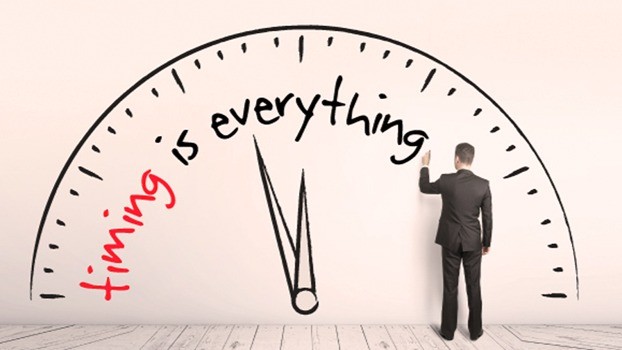
You can have the sharpest idea in Lagos, complete with strategy decks and investor pitches. But if you miss the right moment, na oversabi go carry you enter silence.
The Early Mover signs the deal. Remember when everyone was still shouting Happy New Year in January 2020, and some guy was already importing face masks? Two months later, he became the masked monarch of Mile 2. By March, his turnover hit ₦5.7 million monthly while others were still figuring out suppliers. That's not luck. That's timing.
Same thing with remote jobs. Those who started freelancing during NYSC while the rest of us were updating our CVs for oil companies? Today, they're billing clients from Germany and getting paid in dollars averaging $3,500 monthly while living in Nigeria. No long talk. Those ones saw the signs early and moved.
Nigeria Is Fast. Your Timing Must Be Faster
Our market doesn't wait for anybody. A product that worked last year may flop this year just because the mood changed. Think about bottled water. You might bring in imported water with minerals from Iceland, but if there's fuel scarcity and people are managing small change, guess what they'll buy? Pure water.
The product isn't bad. You just came late to the party with your designer cup. Research from Lagos Business School shows that 68% of failed Nigerian startups didn't fail because of poor products, but because of poor market timing.
If You're Too Early, They'll Laugh. Too Late, You'll Cry.
There's a sweet spot in business: not too early, not too late. Start something too soon, and people will call you confused. Start too late, and you'll be playing catch-up with people who already cashed out.
Look at tech bros. Some entered crypto in 2016 when nobody cared, investing just ₦50,000 in Bitcoin when it was trading below $1,000. Today, they're giving TED Talks and investing in startups. Some jumped in during the 2021 hype, mortgaging their futures at ₦24 million per Bitcoin, and by 2022, their money vanished like MMM.
You Cant Copy Time, Even if You Copy Strategy
In Nigeria, timing is your hidden advantage. Even when the product isn't special, launching it at the right moment can make it fly. You sell jollof rice? Try setting up next to a stadium after a major match when the Super Eagles win. Your ₦2,500 plate suddenly becomes worth ₦4,000 to hungry, celebrating fans. You think you're a cook? My friend, you're a genius.
Any business that knows what's up understands that Ember months are magic. People spend more, flex more, and post more. You want to test a new product? Drop it close to Detty December. That's when taste buds, wallets, and egos open wide. Consumer spending jumps by 40% between November and December according to CBN data. That's not a coincidence, that's an opportunity.
This is why musicians, fashion designers, event planners, and real estate agents all save their biggest moves for year-end. It's not by accident. It's pure calculation.
The Politics of Timing
Ask anyone who tried to run ads during elections. Your entire campaign can disappear like light when rain is falling. Whether you're in tech, finance, or even food delivery, election periods are like dodgy traffic; better to wait it out than enter and get stuck. During the 2023 elections, business investments dropped by over 25% according to the Nigeria Bureau of Statistics. Planning a big move? Check the INEC calendar first.
The Streets Calendar
Our streets talk. People complain, people celebrate, people chase trends. Your job is to listen and move when the time is right. Not when your business partner feels it's time. Not when Instagram says so. But when the streets are open.
While watching the streets is key, smart business owners also look into market research, checking new trends and unusual signs. They track Google search patterns for their industry, watch social media feelings, and even notice changes in how people buy things at local markets. They know that quiet market whispers can be as useful as official reports. Also, while waiting for the perfect moment makes sense, sometimes taking a smart risk, backed by good understanding, can make you a market leader.
Look at TikTok vendors. They jump on trends faster than fuel price jumps. Some of them built full businesses from viral challenges going from 0 to ₦500,000 monthly in weeks. Others waited to "perfect" their strategy and missed the wave completely.
The Timing Toolkit
- Watch People – Listen to what they're asking, spending on, and complaining about. Create a simple spreadsheet tracking trends in your area or industry weekly.
- Test Small – Try things before you go big. Even a roadside suya guy tests new spices before adding them to the full mix. Set aside 10% of your resources to test timing ideas.
- Be Ready to Change – Your plan isn't fixed. If the road changes, change with it. The businesses that survived the Naira redesign of 2023 weren't the biggest they were the most quick to change.
- Watch Global, Act Local – Global trends hit Nigeria with a time lag. Study what's hot internationally and get ready to catch the wave when it lands here.
- Create Your Own Timing – Sometimes, the right time isn't something you wait for it's something you create with limited supply or FOMO marketing.
The Timing Blueprint
In Nigeria, timing separates those who launch and those who last. The smart ones don't just plan, they move when the street is hot. If you get the timing right, even small chops businesses can go international. But if you miss your moment, you'll be left with stories and "what ifs."
So when next you get an idea, ask yourself: Is now the time or am I just feeling brave? Because in this country, boldness without timing is how people end up with container loads of unsold umbrellas in dry season.
Move smart. Move early. And most importantly; move at the right time.
Timing isn't just about when you start, it's also about when you change direction, when you grow bigger, and sometimes, when you exit. The masters of timing know that in Nigeria's business world, the clock never stops ticking.
Was this article helpful?